Lent 2017 – Day 19

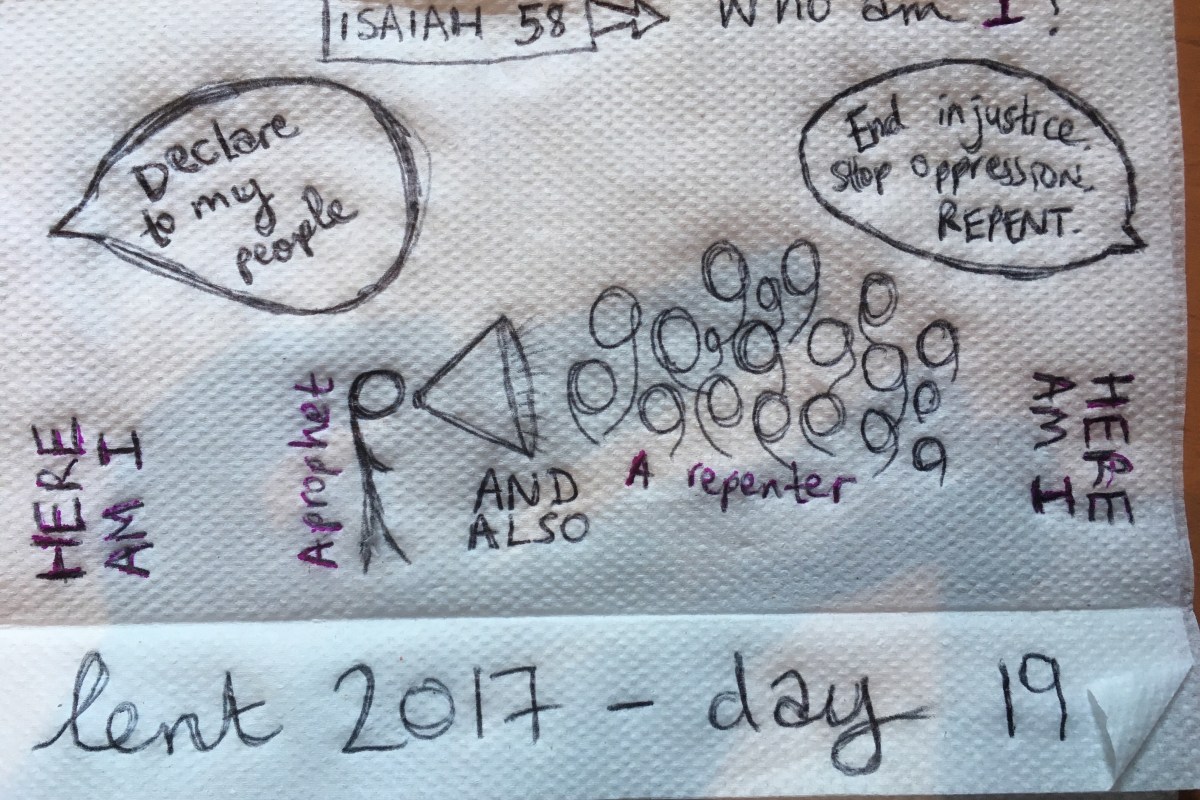
As I reread Isaiah 58 and think about the communal nature of repentance, I realise that I’ve too easily given myself the role of prophet, declaring and calling out the sins of the people.

There’s a time and a place for this… but only if I also acknowledge that I am one of the people, part of the community that needs to act in repentance.

One of the temptations (for me, at least) when it comes to lamenting the sins of my community – be that my nation, my race, my church, my class, my religion – is to echo the Pharisee who prayed:

“Thank God I’m not like those people.”

Luke 18:11

But I am like those people, I am part of that body and I too need to join in the communal repentance.

For instance, when it comes to racism and xenophobia. I’m aware of the sins of my people in this and I’m doing some things to declare where there is injustice and oppression. And there is much I’ve learned already about being anti-racist. But it would be arrogant, hypocritical and wrong to think that I don’t need to repent here too. As a concrete example, I sometimes laugh at jokes/situations where the entire premise for humour is that non-native accents are worthy of derision. I believe that to be wrong, racist and xenophobic, and I need to change. As I become aware of the ways that I absorb and enact the racism of the communities I’m part of, I need to repent – acknowledge the Not Good, receive Goodness, and act differently as a result.

We often cast ourselves as Jesus in the story of the woman being stoned, where he calls those without sin to cast the first stone. And sometimes, yes, I follow Jesus’ example by naming hypocrisy and advocating for grace and mercy instead. But actually, often the characters I need to learn from in this story are those receiving the challenge to repent first before asking others to.


Here am I, one of the people, declaring and repenting of our communal sins so that together we can overturn injustice and oppression. 

[ I am aware that sometimes being told not to be hypocritical is used to silence those who call out communal sins. That’s wrong too (maybe it’ll be a theme in another blog post) and that’s not the message I’m hearing or sharing! ]
Lent 2017 – Day 17

Shout it aloud, do not hold back. 

Raise your voice like a trumpet. 

Declare to my people their rebellion and […] their sins. 

Isaiah 58:1

I’ve been thinking about the call we see in Isaiah 58 to corporate repentance, as a people and a nation.

In the white Western Christian culture I’m part of, we often look at sin and repentance as an individual thing. And yes, we are all individuals with our own personhood and our own personal relationship with God.

But we’re also all connected and all part of a larger body. So when I repent – by Goodness, with Goodness, into Goodness – I do it in recognition of the impact it has on others too. 

Like today, for example. I had a conversation with God halfway through the day about needing Holy Spirit’s help to find peace and strength when I was losing them after facing a few difficult work situations. I allowed my thinking to be renewed by Goodness and I stepped into it by behaving differently. I did it for me, but I also needed to do it because of my connection to the people around me. I was caught up in my own pressures and worries, which were (mostly!) valid and revealed where I needed God’s help. But I realised that these were impacting my demeanour and my words and my response to others and in turn the whole atmosphere of our work environment. 

Actually, this has been my prayer all week, the conversation with God I’ve kept coming back to and the request I asked friends to pray for too – that I would be able to create a joyful and peaceful atmosphere at work in the midst of difficult situations and a stretched team. But still I forgot and forget and am learning.

Today I saw clearly how allowing God’s goodness to change me – repenting – made space for Goodness to flow through me. And wanting that Goodness for those around me gives me the courage to step into it for myself too.

Lent 2017 – Day 16

Hmm, I find myself needing to repent of my repenting discipline, having not engaged with it for ages!

My usual tactics here would be one of the following:

  • Write the whole thing off as a failure (or rather, call myself a failure) and give up completely.
  • Decide I need to make up for where I’ve fallen short by filling in everything that I’ve failed at. In this case, I feel like I ought to have at least 5 posts ready to publish before starting again.
  • Because the second option is too hard and overwhelming, do nothing and therefore default to the first option through inaction.

And all of this gets covered in a lovely blanket of guilt and self-condemnation!

But if Repentance is about allowing my mindset to be altered and stepping out into a new thing, then I want to change the way I repent too!

So here I am. 

I receive all of the Goodness of God in the places where I’ve judged  myself to be Not Good. And I choose to start here and now with a tiny step, which will be followed by another and then another and then (I hope) more and more.

Lent 2017 – Day 6

Today I read this post and in it Tuhina Verma Rasche talks about the wilderness of Lent and about waiting in the desert and about it being a time of discomfort.

We choose to fast with our Lenten disciplines (whatever form that takes) in order to strip away our fallback comforts and dis-comfort ourselves. We choose to wander in the wilderness. 

We do it so that God may search our hearts and reveal the Not Good within us and within the world. We do it so that God may reveal a fuller picture of Good to us. And these two revelations lead us to repentance as they expand our thinking and call us to Light, even in the midst of Darkness.

 (I love the connection Verma Rasche makes between Advent and Lent in her post too!) 

But the frustration of fasting and wandering in the wilderness almost always comes before this revelation of light…

For day after day they seek me out […] They ask me for just decisions and seem eager for God to come near them. 

‘Why have we fasted,’ they say, ‘and you have not seen it? Why have we humbled ourselves, and you have not noticed?’

Isaiah 58:2-3

I think we feel this frustration because we mistake the reasons for fasting. We hope that if we do this well enough or sacrifice hard enough or wait long enough or repent of enough then God will have to respond and it will surely be in our favour. 

But the disciplines of Lent that take us into desert places are not about us, they are about God in us (God with us!) revealing Not Good and Good. And God is Good, God is Light, God is Present, even in the wilderness and the waiting and the discomfort and the silence. 

As we wait, trusting and knowing that God is with us, we see that only God can turn the Not Right to Right. We see that our part is simply to make space for and live out the change caused in our hearts as the fullness of this I am God transforms our minds.

Because one of the gifts God gives us is that we can change and we can step into more Good and Right and be bringers of Light to the darkness around us. As Verna Rasche puts it:

“What will be not just your Lenten practice, but your practice to fight the powers of this world and of Empire, especially with the current days being marked with acts of violence against a number of marginalized groups? 

[…]

How will you wait in the midst of the discomfort, yet finding what gives you the breath of the Spirit of God at the same time?”

Which brings me back to the words of Isaiah, which tell me that my fasting will always be frustratingly meaningless unless it  seeks Light and brings Light in the dark and desert places, allowing God to turn Not Right to Right, within us and through us.

Then your light will break forth like the dawn, and your healing will quickly appear; then your righteousness will go before you, and the glory of the Lord will be your rear guard.

[…]

Then your light will shine out from the darkness, and the darkness around you will be as bright as noon.

Isaiah 58:8 & 10 

Lent 2017 – Day 5

Today the following appeared on my facebook feed and it made me stop and think:
“We may be quick with rebuttals in the public square, but we must be quick with a listening ear in the neighbour’s kitchen.”
The thing about public rebuttals is that they are loud and have a large audience and can drown out any invitation we want to offer to our neighbour to come to our kitchen table.

But I’m also challenged by Isaiah to 

“Shout with the voice of a trumpet blast. Shout aloud! Don’t be timid. Tell my people Israel of their sins!”

Isaiah 58:1

So how do I speak and shout and offer public rebuttals (often to public rebuttals!) that call out the unjust and uncompassionate words and deeds I see but without becoming yet another clanging gong, responding loudly but with no love?

Often when there are systemic or structural sins to cry out over, those who would lament them loudly are urged to be “gentle and soft” with their words, to seek unity and not to be divisive. This happens particularly in the (white middle class) church, where politeness and the appearance of peace is valued so highly.

I guess I have to try and do what is called for here, to use my voice most loudly to call out the sins of the most powerful and the most listened to and the most noisy – in order to help “loose the chains of injustice and untie the cords of the yoke.”

And there are many ways to use my voice loudly for this, not least of which is shutting up and placing a megaphone in front of the most powerless and the most silenced and the most ignored, if they want it.

The post which talked about public rebuttals and neighbour’s kitchens was urging Christians to “challenge the ideologies behind ‘transgenderism.'” I’m still learning so much about and from transgender people and working through things I have learned and accepted about identity and gender and God. (It’s another unearned privilege of my life that I’ve not had to personally wrestle with this before, and in no way compares to the struggle transgender people face to claim and live out and be valued for their personhood!)

So this is me, loudly saying that the way we (the majority church) talk about transgender people is harmful and dangerous. And this is me, shutting up and going to listen to the voices of those we often ignore in these discussions and inviting you to join me.

Here or here might be good places to start.
[The image I used here is Megaphone by Gilberto Agostinho/CC/Flickr.]

Lent 2017- Day 4

(My thanks to Yolanda Pearce who shared a quote from a Black theologian on her Twitter feed every day during Black History Month, which is where I found the one by Kelly Brown Douglas featured here.)

I saw an osteopath this week and it reminded me of just how connected the body is. Our physical, mental, emotional and spiritual health are connected. And the different parts of our body are connected to each other.

For instance, if my knee is injured it may alter the way I stand or walk. And my back may compensate for that in some way, which may cause there to be tension across my shoulders and up my neck. Which may give me a headache. Which in turn may dull my focus and distract my thoughts and affect my emotions. Maybe I’ll be less patient and more snappy with those around me. Everything is connected.

Just as our bodies have many parts and each part has a special function, so it is with Christ’s body. We are many parts of one body, and we all belong to each other.

Romans 12:4-5

The Bible describes the people of God (and let’s define that really broadly) as a body, with each part connected and having an impact on the others. And, as the quote from Kelly Brown Douglas says (more of her writing can be found here) – we’re to look for ways to move in empathy for the other parts of the body.

Fannie Lou Hamer gave a speech titled ‘Nobody’s free until everybody’s free’ and that quote still rings powerfully today.

Perhaps that’s what Isaiah was calling us to, when he spoke about “true fasting.”

Is this what you call fasting?

Do you really think this will please the LORD?

“No, this is the kind of fasting I want:

Free those who are wrongly imprisoned;

lighten the burden of those who work for you.

Let the oppressed go free,

and remove the chains that bind people.

Share your food with the hungry,

and give shelter to the homeless.

Give clothes to those who need them,

and do not hide from relatives who need your help.

“Then your salvation will come like the dawn,

and your wounds will quickly heal.

Your godliness will lead you forward,

and the glory of the LORD will protect you from behind.”

Isaiah 58:5-8

Being part of a body means that I cannot move through the world ignoring the “suffering, the heartache, the hunger of others for life, liberty and happiness – for justice” (Kelly Brown Douglas)

Maybe, because all the parts of the body are connected, my wounds cannot heal fully until all our wounds are healed. Maybe, because all the parts of the body are connected, I cannot be fully free until are all fully free. Maybe, because all the parts of the body are connected, I cannot fast as an individual unless I am looking for justice and compassion for others.

Maybe there’s even a privilege in being able to choose to fast something (be it food or TV or social media or …) when others don’t have that choice.

So, if everyone is connected, how does that impact how I live here and now, in the everyday? Rather than being overwhelmed by the sheer scale of that interconnectedness and at the life, liberty and happiness with which I personally move through the word when others do not, how do I take a small step to live differently? Which is, after all, what repentance is – having changed behaviour because of a changed perspective.

Well, the fasting (if you define it very loosely!) I have chosen this Lent is to read Isaiah 58 everyday. And as I’ve been reflecting on the theme of justice and compassion, I’ve been reading a lot of other things too. I’ve bought myself a fair few books. So, I’m going to share the gift and discipline of reading with people near me who would maybe not be able to choose the same form of fasting. I’ve taken a book off my ‘to buy’ list and (after a little bit of research) have given the money instead to the Craigmillar Literacy Trust, a local Edinburgh charity.

Just as a body, though one, has many parts, but all its many parts form one body, so it is with Christ. […] The body is not made up of one part but of many.

[…] There should be no division in the body, but that its parts should have equal concern for each other. If one part suffers, every part suffers with it; if one part is honored, every part rejoices with it.

Excerpts from 1 Corinthians 12

Lent 2017 – Day 3

I have the beginnings of several posts mulling over in my head, and can’t seem to settle on any of them. That’s partly why I didn’t write yesterday, because my thoughts keep swirling from one thing to the next.

There’s so much of life to ponder that the sheer volume of it feels overwhelming.

There is love

and joy

and memories

and fear

and sadness

and contentment

and insecurity

and hopes

and peace

and repentance

and anger (both righteous and unrighteous)

and impatience

and kindness

and disappointment

and in amongst all of that, there’s the day-in, day-out ordinariness of life to live.

So I take the gift and the discipline of this Lenten practice,
in spite of and because of the tangle inside my head,

and I stop.

I read (again) the passage I’ve chosen and wrestle through the good and powerful words about fasting and oppression and freedom and justice and find (again) this reminder:

Isaiah 58:11

The Lord will guide you continually, giving you water when you are dry and restoring your strength. You will be like a well-watered garden, like an ever-flowing spring.

In spite of and because of my weakness,
in spite of and because of my strength,

God is present.

God brings refreshment and restoration and rest.

God wrestles with me through the tangle.

Nothing is settled or sorted or untangled, and maybe that isn’t the goal.

Because in the midst of the tangle, there is stillness.

Lent 2017 – Day 1

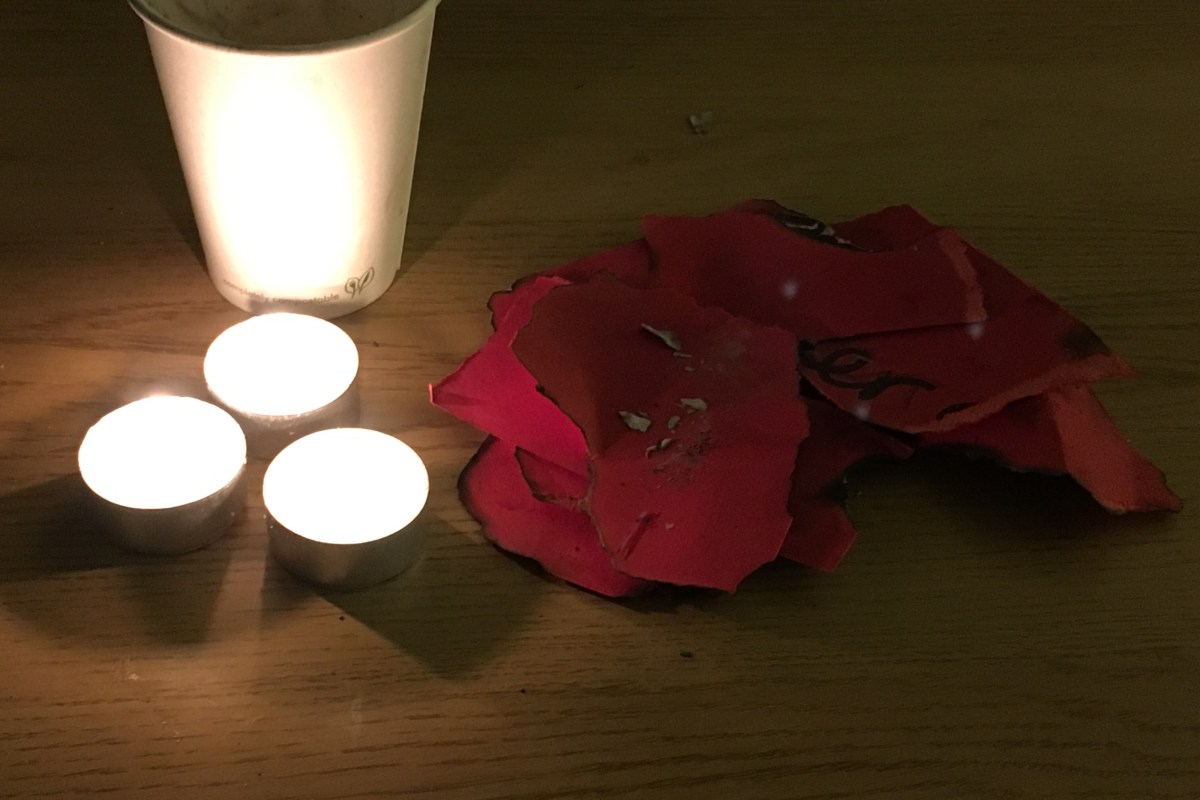
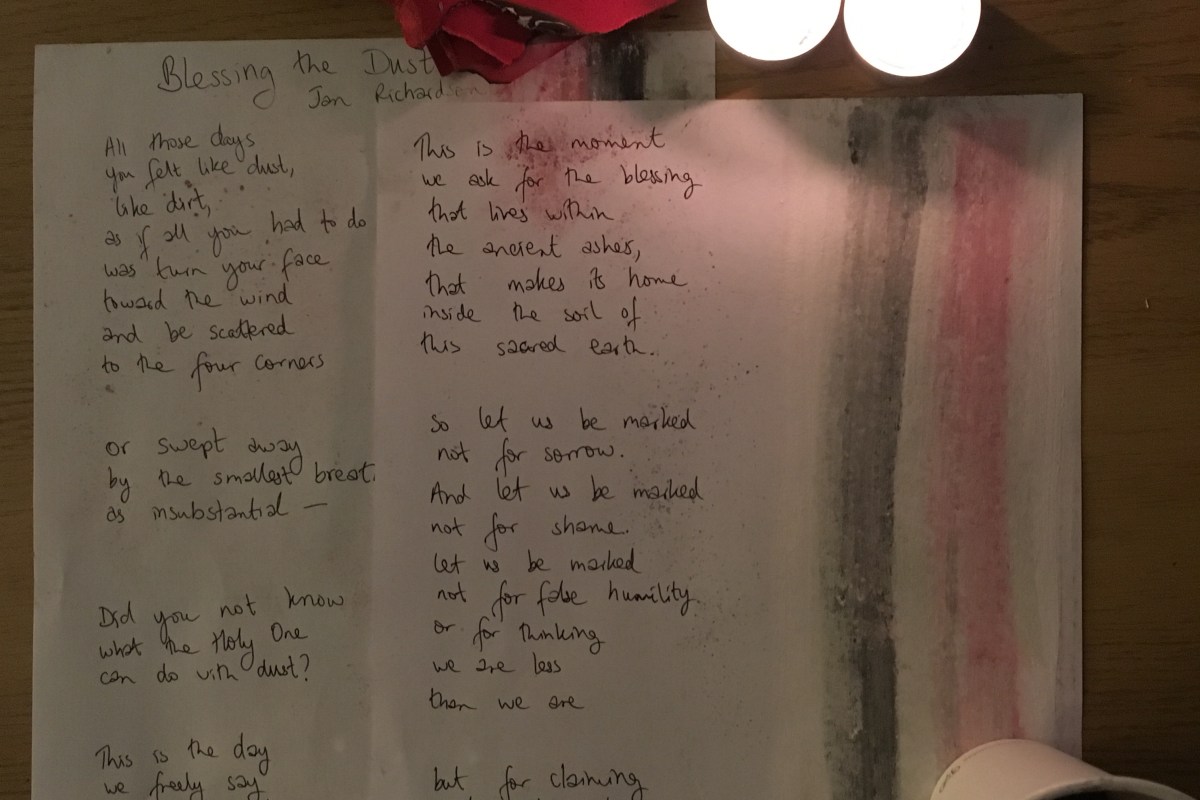
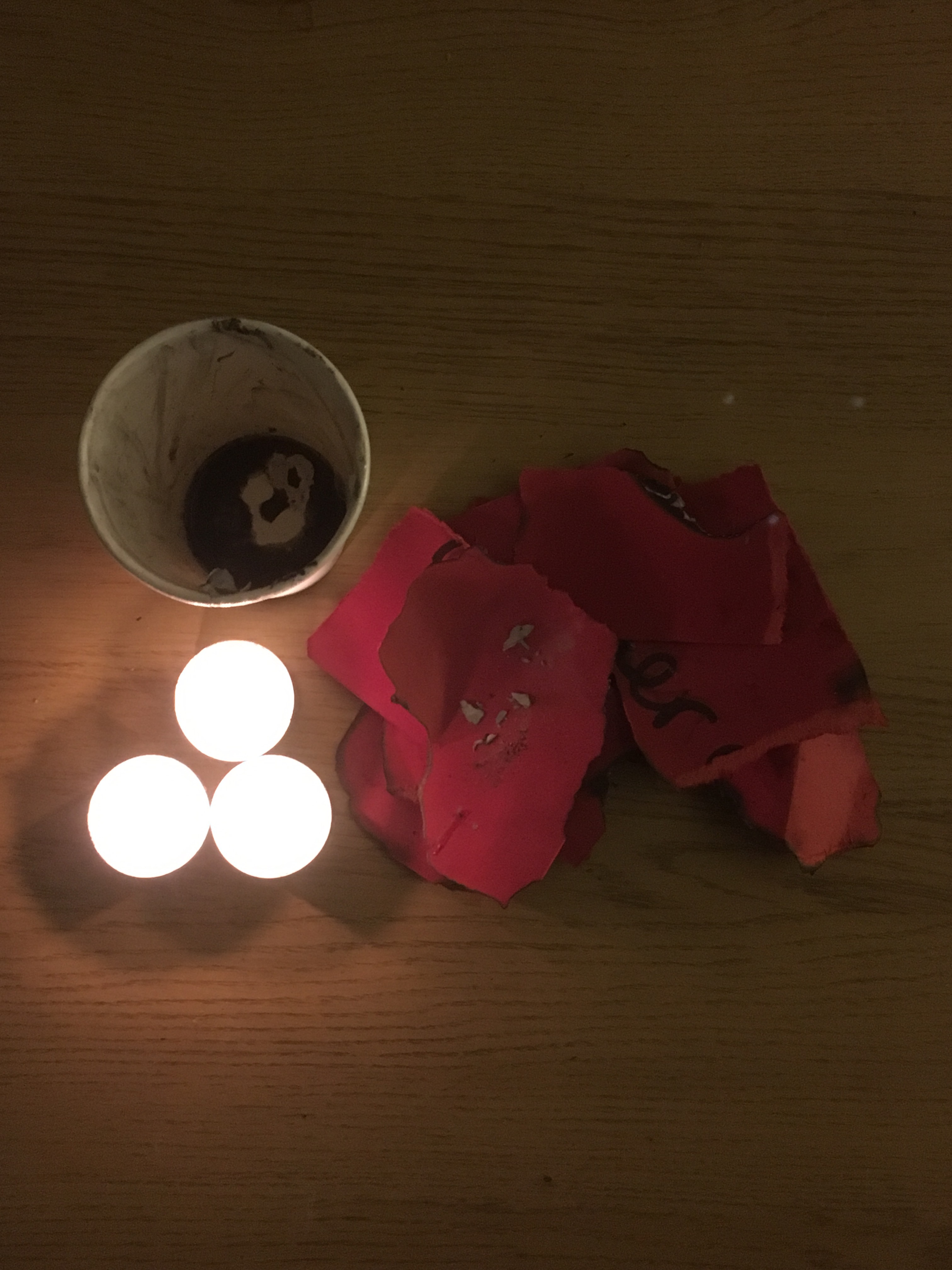
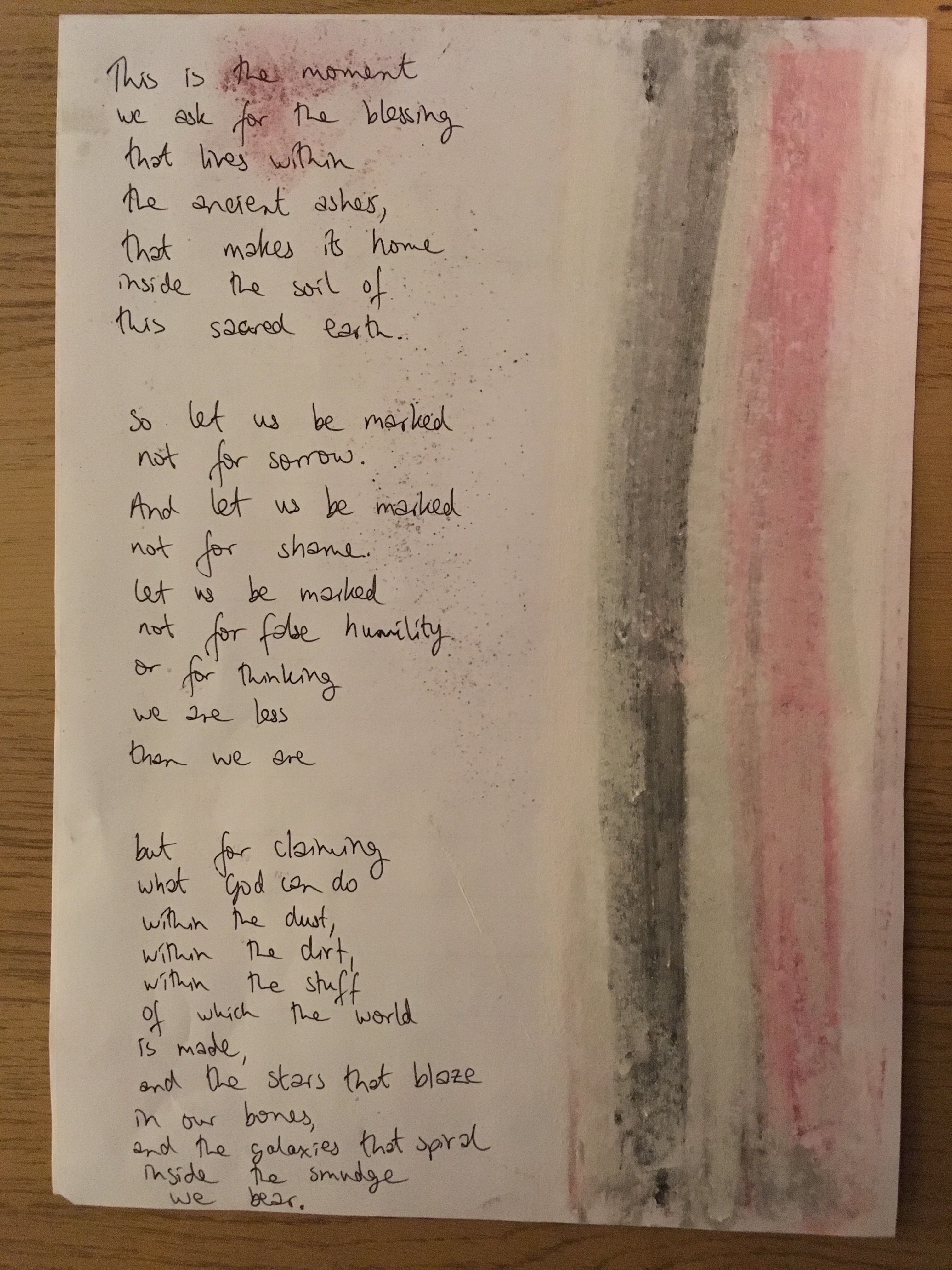
Today I used the words of this poem by Jan Richardson to think about Ash Wednesday, the first day of Lent.

I love these lines in particular:

Did you not know

what the Holy One

can do with dust?

The beauty of Lent, of making space to lament and to repent, is that the Holy One can do so much with all that is dust and ashes in our lives.